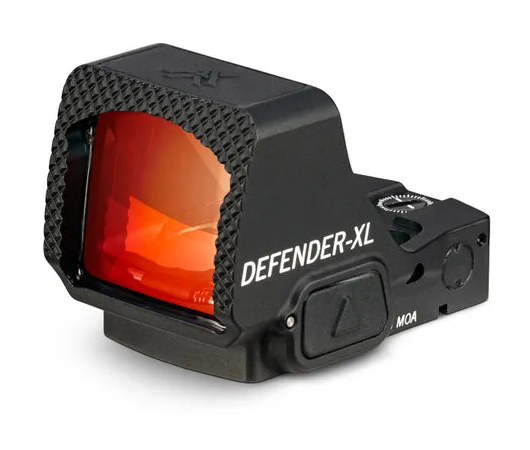
Concealment, Competition, or Backup. Pick the Right Dot.

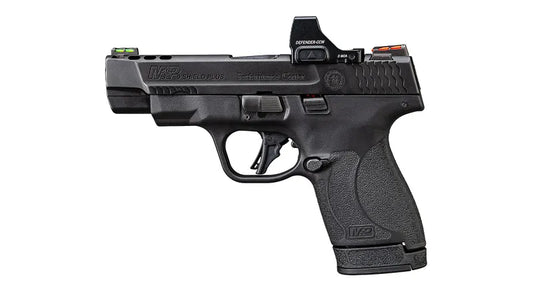
A micro red dot for a pistol has to solve a genuinely different problem than a rifle optic — it has to survive slide recoil, fit a small footprint, and either disappear for concealed carry or maximise window size for fast target acquisition. The same optics in this range also serve a second, distinct role: as a backup red-dot sight alongside an LPVO or prism scope, giving you an immediate non-magnified aiming option without touching your primary optic's zoom or zero. Six models span this range, from an affordable first pistol dot through to a flagship built specifically for competition.

How to Choose the Right Pistol Dot

A few things matter more than the rest when comparing pistol and backup dot optics:

  • Mounting footprint — this isn't universal across the range. Concealed-carry models typically use the Shield RMSc footprint suited to sub-compact and micro-compact slides, while duty and competition models use the larger DeltaPoint Pro footprint. Confirm your specific slide cut before ordering.
  • Window size vs. weight — a larger window makes for faster target acquisition and a more forgiving sight picture, but it also means a bigger, heavier optic sitting on your slide. Concealment favours small and light; competition favours a bigger window.
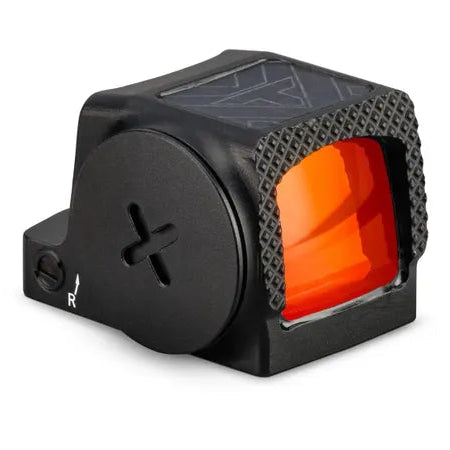
  • Battery technology — standard models use either a CR1632 or CR2032 battery, depending on the optic, and provide thousands of hours of runtime; Enclosed Solar models use a sealed housing with a solar-assisted battery system that can extend runtime dramatically, at the cost of extra weight and bulk. This is a genuinely different design, not just a colour option.
  • Dot size — a smaller MOA dot (2-3 MOA) suits precise, deliberate shots; a larger dot (6-8 MOA) suits faster, closer engagement where speed matters more than fine precision.

Match the optic to the actual role — a concealment-focused CCW model and a competition-focused XL are solving different problems, not just sitting at different price points.

Using a Micro Dot as a Backup Red-Dot Sight

These same micro dots are also widely used as a secondary sighting system alongside an LPVO or prism scope — a genuine backup if your primary optic fails, fogs, or loses zero, and a fast option at extreme close range where even a 1x setting on a magnified optic isn't ideal.

There are two common ways to mount one for this role:

  • 45° offset mount — the dot sits angled off to the side of your primary optic. A small roll of the rifle brings the offset dot into view quickly, generally with minimal head movement.
  • Raised "diving board" or riser mount — the dot sits directly above the primary optic, elevated on a mount (such as Vortex's Precision Diving Board Mount) so you can look straight over the top of your LPVO or prism scope to use it, rather than rolling the rifle to the side.

Which method suits you comes down to shooting style and preference — offset mounting keeps the optic out of your primary sight picture entirely, while a raised mount keeps the secondary optic vertically aligned above the primary optic instead of offset to one side. Either way, this is genuinely a case where a smaller, lighter model in this range (rather than the largest-window competition option) is usually the better fit, since it's a backup system, not your primary sight.

Which Micro Dot Optic Should You Buy?

Compare Vortex Pistol & Backup Dot Optics

Model Tier Best Suited For Weight & Battery Life Noctis Verdict
Venom® Enclosed Micro Dot Essential Level First pistol dot on a genuine DeltaPoint Pro footprint, best price in this range 50g, 20,000hrs Best Value Entry
Defender-CCW™ Professional Concealed carry on sub- and micro-compact pistols — smallest, lightest option here 27g, 9,500hrs Best True Concealment
Defender-CCW™ Enclosed Solar Professional Concealed carry with dramatically longer runtime, still genuinely compact 37g, 125,000hrs Best CCW Battery Life
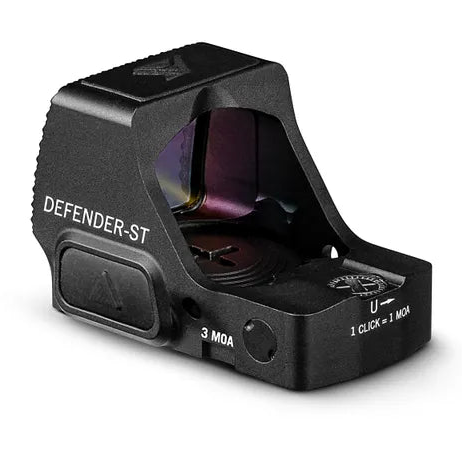
Defender-ST™ Professional General use — everyday carry, competition, and duty on a full-size pistol 42g, 25,000hrs Best Overall Balance
Defender-ST™ Enclosed Solar Premium Duty and competition use where exceptional battery efficiency and enclosed-emitter protection matter 46g, 150,000hrs Best Duty Battery Life
Defender-XL™ Top Shelf Competitive shooting — largest window and widest dot-size choice in this range 55g, 25,000hrs Best Competition Pick

The genuine differentiator across this range isn't just price — it's window size, mounting footprint and battery technology. CCW uses the Shield RMSc footprint and is purpose-built for concealment; ST and XL share the DeltaPoint Pro footprint and step up window size and features; "Enclosed Solar" models use a completely different, heavier housing with a solar-assisted battery system, not simply a colour or dot-size option on the standard body.

6 products