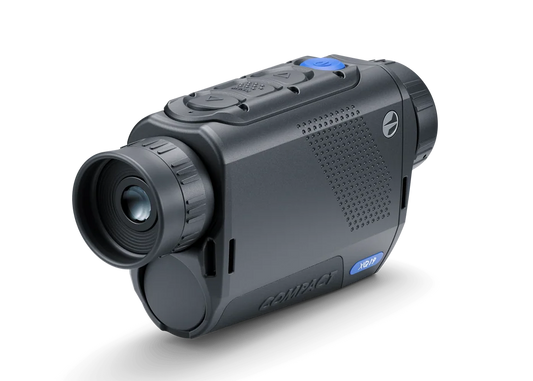
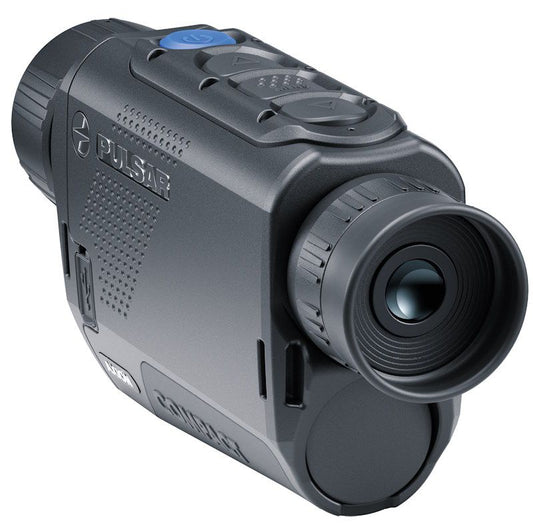
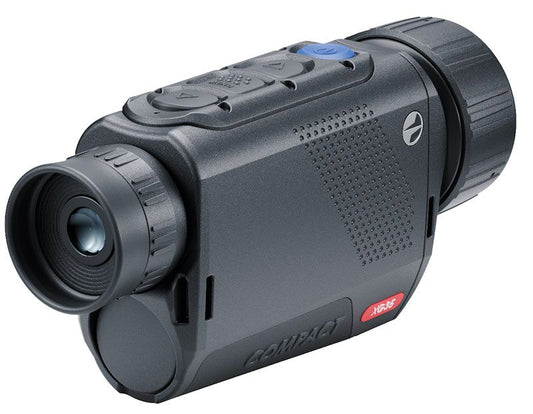
See What Others Can't.

A thermal monocular detects heat, not light — meaning it works in total darkness, through smoke or light foliage, and picks out a warm body against a cold background even when there's no ambient light to work with at all. Whether you're a hunter tracking game at last light, a landowner checking your perimeter, or an operator needing to detect a threat before it detects you, a thermal monocular gives you a genuine advantage that no other optic on the market can match. It's one of the few pieces of equipment that changes what's actually possible, rather than just making an existing task a little easier.

Why Choose a Thermal Monocular?

A thermal monocular is a heat-detection device, not a light-amplification one — so unlike night vision, it doesn't need any ambient light to work at all. It'll pick out a warm body in pitch darkness, through light brush or smoke, and detect movement well before you'd see it with the naked eye.

What it's not built for: reading fine detail, identifying facial features, or seeing colour and texture — thermal shows heat signatures, not a clear visual picture. For close-range detail work or general low-light viewing, night vision is usually the better tool.

Thermal isn't just a nighttime tool either. Because it's reading heat rather than visible light, it's also extremely effective during daylight — cutting straight through camouflage, foliage, and other visual clutter that would normally hide a target against a complex background. If something's warmer than its surroundings, thermal will find it, day or night.

How to Choose the Right One

A few figures matter more than the rest when comparing thermal monoculars:

  • Detection range — the distance at which the device can pick out a human-sized heat source. Higher isn't always necessary; match it to how far you actually need to see, since longer-range units cost more.

  • Resolution — the sensor's pixel count. Higher resolution gives a clearer, more detailed thermal image, which matters more the further out you're trying to identify something.

  • Refresh rate — how smoothly the image updates. A higher refresh rate matters if you're tracking movement rather than scanning a static area.

  • Battery life — thermal sensors draw more power than standard optics, so realistic runtime matters for longer sessions in the field.

Beyond the numbers, think about how you'll actually use it — a compact handheld unit for quick checks is a different tool from a mounted device meant for extended observation.

Thermal vs. Night Vision Devices

Night vision devices work by amplifying whatever small amount of ambient light is available — moonlight, starlight, or a distant light source — into a visible image. Thermal doesn't rely on light at all; it detects heat directly, which is why it works in absolute darkness where night vision has nothing left to amplify. Within night vision itself, analog units generally give a noticeably sharper, more natural image than digital ones, but come at a higher price — digital night vision is the more affordable route into the category.

Thermal has its own limitations worth knowing. It sees straight through rain, fog, dust, and smoke, which makes it excellent in poor visual conditions — but it cannot see through glass. A pane of glass blocks the heat signature entirely, so thermal won't help you see through a window or windscreen.

In practice, the two tools earn their keep in different situations. Thermal is unmatched for scanning, searching, and detecting or identifying a living thing at range — whether that's a hunter picking out game in thick bush, a landowner checking a treeline, or an operator identifying a threat before making contact. Night vision is the better tool for actually dealing with a problem up close, particularly in CQB or urban environments, where clear detail and depth perception matter more than heat detection. You wouldn't want to fight at close quarters through a thermal sight — but for finding and engaging a target at medium to long range, whether hunting or operational, thermal is very hard to beat.

Which Thermal Monocular Is Right For You?

Compare Thermal Imaging Monoculars

Model Tier Best Suited For Detection Range Noctis Verdict
Pulsar Axion Compact XQ19 Essential Level First-time buyer, budget-conscious scanning 750m Best Value Entry
Pulsar Axion Compact XQ30 PRO Mid Tier Close-range observation in poor weather 1,050m Weather Pick
Vortex Veil 400 Mid Tier Familiar controls, premium warranty backing 1,006m Warranty Pick
Pulsar Axion Compact XG30 Professional Thick bush and dense vegetation 1,300m Vegetation Pick
Pulsar Axion Compact XG35 Top Shelf Active hunts, close-to-mid-range detection 1,750m Longest Range

Detection range is the distance at which a human-sized heat signature can be detected (not necessarily identified) under favourable conditions. Sensor resolution, pixel pitch and display quality also meaningfully affect real-world image clarity — a longer detection range does not automatically mean a clearer or more usable image at that distance.

5 products